
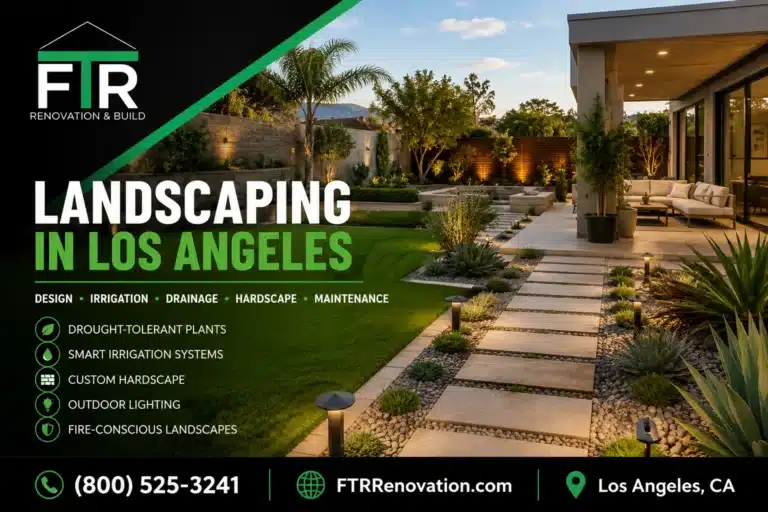
Landscaping in Los Angeles requires more than choosing attractive plants and installing a new lawn. A successful outdoor renovation must account for Southern California’s climate, water use, drainage, soil conditions, maintenance needs, and the way your family plans to use the property.
Whether you want to improve your front yard, create a comfortable backyard, replace an old lawn, or complete the landscaping around a newly built home or ADU, careful planning can help you build an outdoor space that looks beautiful and performs well for years.
Why Landscaping in Los Angeles Requires Careful Planning
Los Angeles properties can present several landscaping challenges. Some yards have poor drainage, compacted soil, steep slopes, aging irrigation systems, or plants that require too much water. Other properties need landscaping that works around a patio, pool, driveway, room addition, or accessory dwelling unit.
Before construction begins, homeowners should consider:
- How the yard will be used
- Sun and shade conditions
- Existing soil and grading
- Water and irrigation requirements
- Drainage around the house
- Plant growth and maintenance
- Walkways, patios, and outdoor living areas
- Privacy and security
- Wildfire exposure in hillside communities
- The overall construction budget
A complete landscaping plan should connect all these elements rather than treating plants, irrigation, drainage, and hardscape as separate projects.
Start With a Functional Landscape Design
The first step is to divide the property into functional areas.
A front yard may focus on curb appeal, an inviting walkway, low-maintenance planting, landscape lighting, and a clear view of the home. A backyard may include a patio, barbecue area, artificial grass, garden, fire pit, seating area, play space, or privacy planting.
A well-designed landscape should also provide convenient paths between the house, garage, driveway, ADU, and outdoor entertainment areas.
Consider the mature size of every plant. Shrubs and trees that look small during installation can eventually block windows, damage walkways, interfere with roofing, or grow too close to the foundation. Proper spacing helps reduce future trimming and replacement costs.
Drought-Tolerant Landscaping in Los Angeles
Many homeowners are replacing traditional lawns with drought-tolerant or California-friendly landscaping. This does not mean the yard must look dry or empty.
A water-efficient landscape can include:
- California native plants
- Flowering drought-tolerant shrubs
- Ornamental grasses
- Succulents
- Shade trees
- Ground cover
- Decorative gravel
- Mulch
- Dry creek features
- Permeable walkways
- Small areas of grass or artificial turf
The California Department of Water Resources recommends water-efficient plants and irrigation as ways to conserve resources while supporting biodiversity and pollinators. LADWP also encourages California-friendly landscaping and currently provides information about turf-replacement incentives. Homeowners should confirm current eligibility and receive any required approval before removing an existing lawn.
Plant selection should be based on the property’s specific conditions. A plant that performs well in full sun may struggle on the shaded side of a house. Soil type, wind exposure, drainage, and the amount of reflected heat from concrete or stucco can also affect plant health.
Irrigation System Installation and Upgrades
An efficient irrigation system is one of the most important parts of landscaping in Los Angeles.
Older sprinkler systems may have broken lines, leaking valves, poor coverage, or sprinkler heads that spray sidewalks and driveways. These problems waste water and can damage paving, fences, stucco, and nearby structures.
Depending on the landscape design, irrigation options may include:
- Drip irrigation for trees and shrubs
- Separate irrigation zones for different plant types
- High-efficiency sprinkler heads
- Weather-based irrigation controllers
- Pressure regulators
- Automatic shutoff devices
- New valves and irrigation lines
- Soil-moisture sensors
LADWP recommends checking irrigation systems for leaks and misaligned sprinkler heads, preventing runoff, using drip irrigation for trees and shrubs, and considering weather-based controllers.
The irrigation system should be designed after the planting plan is completed. This allows plants with similar watering needs to be grouped together and placed on the same irrigation zone.
Drainage and Grading
Drainage should be evaluated before installing new plants, grass, concrete, pavers, or artificial turf.
Water that collects near the foundation can contribute to moisture problems, erosion, damaged finishes, and unhealthy plant conditions. New patios and walkways can also redirect water if they are installed without the correct slope.
A drainage plan may include:
- Proper grading away from the house
- Area drains
- Catch basins
- Channel drains
- French drains
- Downspout extensions
- Swales
- Permeable paving
- Dry wells or water-capture features
Connecting private drainage systems to public storm-drain infrastructure may require City approval or permits. The City of Los Angeles Bureau of Engineering reviews certain drainage connections and methods of directing site water toward public streets or storm drains.
Drainage should therefore be planned before the decorative landscaping is installed—not after water problems appear.
Hardscape and Outdoor Living Areas
Hardscape refers to the non-plant elements of a landscape. These features make the yard easier to use and help define outdoor spaces.
Common hardscape improvements include:
- Concrete patios
- Paver patios
- Walkways
- Driveways
- Retaining walls
- Steps
- Garden borders
- Barbecue islands
- Outdoor kitchens
- Fire pits
- Seat walls
- Pergolas
- Patio covers
- Landscape lighting
The materials should complement the architectural style of the home. Modern properties may look best with large-format concrete, clean lines, and simple planting. Traditional homes may benefit from brick, natural stone, warm-colored pavers, and layered gardens.
Hardscape must also be coordinated with irrigation sleeves, electrical conduits, gas lines, drainage pipes, and future construction. Installing these items before pouring concrete or laying pavers can prevent expensive demolition later.
Artificial Grass Versus Natural Grass
Both artificial and natural grass can work well when installed in the correct location.
Artificial grass offers a consistently green appearance and requires no regular irrigation or mowing. It can be useful for small recreation areas, side yards, pet areas, or locations where natural grass is difficult to maintain.
However, artificial turf still requires:
- Proper excavation
- A compacted base
- Drainage preparation
- Quality seams and edge fastening
- Periodic cleaning
- Pet-waste maintenance
- Heat and sun-exposure consideration
Natural grass may be preferred for homeowners who want a cooler surface, a traditional lawn, or a soft play area. It requires more water, mowing, fertilizing, and seasonal maintenance.
The right choice depends on how the space will be used, how much maintenance the homeowner wants, and the property’s sun and drainage conditions.
Fire-Conscious Landscaping
Landscaping is especially important in hillside areas and communities exposed to wildfire.
CAL FIRE identifies the first five feet around a structure as the area where ember-resistant planning is most important. Landscaping farther from the building should also be maintained to reduce dead vegetation, heavy plant growth, and pathways that could allow fire to move toward the structure.
Fire-conscious landscaping may include:
- Keeping combustible mulch away from structures
- Removing dead leaves and branches
- Maintaining space between plants
- Pruning tree branches
- Avoiding dense vegetation beside the house
- Selecting appropriate low-growing plants
- Keeping roofs, gutters, and decks clear of debris
Local fire requirements can vary by location, so homeowners in wildfire-prone communities should confirm the rules for their property.
What Affects Landscaping Costs?
The cost of landscaping in Los Angeles depends on the size and condition of the property, the materials selected, and the amount of preparation required.
Major cost factors include:
- Demolition and debris removal
- Soil removal or imported soil
- Grading and compaction
- Drainage installation
- Irrigation repairs or replacement
- Plant size and quantity
- Natural or artificial grass
- Concrete and paver installation
- Retaining walls
- Fencing and gates
- Landscape lighting
- Electrical or gas work
- Access for equipment
- Permit or engineering requirements
A basic planting and irrigation upgrade will cost less than a full backyard renovation with drainage, pavers, retaining walls, lighting, a patio cover, and an outdoor kitchen.
Homeowners should request a detailed scope of work that explains what is included. A low estimate may not include demolition, hauling, soil preparation, irrigation modifications, drainage, or final cleanup.
Choosing a Landscaping Contractor
Before hiring a contractor, ask about:
- Similar completed projects
- Demolition and disposal
- Grading and drainage
- Irrigation installation
- Plant warranties
- Hardscape preparation
- Project scheduling
- Cleanup and final walkthrough
- Permits or inspections that may be required
It is also helpful to select a contractor who understands how landscaping connects with the rest of the property. Drainage, foundations, patios, additions, roofing downspouts, driveways, pools, and ADUs can all affect the final landscape design.
Professional Landscaping in Los Angeles
Foundation To Roof Inc. provides landscaping and exterior renovation services for Los Angeles-area homeowners. Our team can coordinate landscaping with drainage, grading, irrigation, concrete, pavers, patios, fencing, home renovations, room additions, ADUs, and new construction.
Our goal is to create an outdoor space that complements your home, fits your lifestyle, and is properly prepared from below the ground to the finished surface.
To discuss your landscaping project, call Foundation To Roof Inc. at (800) 525-3241 or visit FTRRenovation.com.
Frequently Asked Questions
What is the best landscaping for Los Angeles?
The best landscaping combines climate-appropriate plants, efficient irrigation, proper drainage, functional hardscape, and a realistic maintenance plan. The design should also reflect the property’s sun exposure, soil, architectural style, and intended use.
Does drought-tolerant landscaping have to use only rocks?
No. Drought-tolerant landscaping can include colorful flowers, shrubs, ornamental grasses, shade trees, ground cover, mulch, and California native plants. Rocks and gravel should support the design rather than replace all living plants.
Is artificial grass a good choice in Los Angeles?
Artificial grass can be a good option for small lawns, pet areas, play spaces, and locations where natural grass is difficult to maintain. Proper base preparation, drainage, edge fastening, and high-quality materials are essential.
Should drainage be installed before landscaping?
Yes. Grading and drainage should usually be completed before installing plants, grass, pavers, or concrete. Correcting drainage after the finished landscaping is installed can require expensive demolition and replacement.
How long does a landscaping project take?
The timeline depends on the size and complexity of the project. A planting and irrigation upgrade may be completed relatively quickly, while a full outdoor renovation involving demolition, grading, drainage, hardscape, retaining walls, lighting, and planting will require more time.