
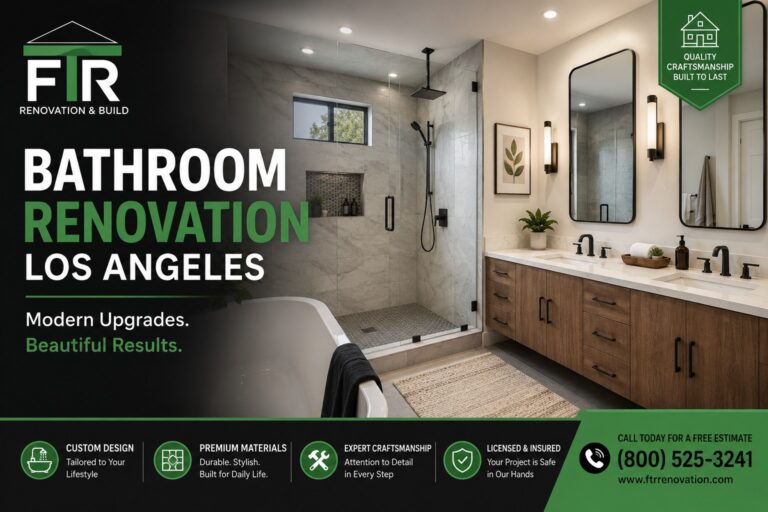
A bathroom renovation in Los Angeles can improve the comfort, functionality, and appearance of your home. Whether you want to replace an outdated shower, improve storage, repair water damage, or completely redesign the room, careful planning is essential.
Bathrooms are compact spaces, but they involve several construction trades. Plumbing, electrical work, waterproofing, tile installation, ventilation, cabinetry, and finish work must all be properly coordinated.
At FTR Renovation, we help Los Angeles homeowners manage the complete bathroom remodeling process—from the initial design and material selection to construction and final inspection.
Why Renovate Your Bathroom?
An older bathroom may have worn finishes, insufficient storage, poor lighting, outdated plumbing fixtures, or a layout that no longer works for your family.
A professional bathroom renovation can help you:
- Improve the bathroom’s layout and usability
- Replace damaged or outdated materials
- Create additional storage
- Upgrade the shower or bathtub
- Improve lighting and ventilation
- Reduce unnecessary water use
- Make the bathroom easier to clean
- Create a safer and more accessible space
- Give your home a fresh, modern appearance
The best renovation is not simply the most expensive one. It is a project that improves how the bathroom works while selecting materials that can handle daily moisture and frequent use.
1. Improve the Bathroom Layout
The layout is one of the most important parts of a successful bathroom renovation in Los Angeles.
A bathroom may feel cramped because of an oversized vanity, an inward-swinging door, poor fixture placement, or unused floor space. A new layout can make the room feel larger without increasing its square footage.
Possible layout improvements include:
- Replacing a large bathtub with a walk-in shower
- Installing a floating or compact vanity
- Moving the toilet to improve privacy
- Changing the direction of the door
- Adding a recessed medicine cabinet
- Creating a separate shower and bathtub
- Widening walking areas
- Improving access to storage
Keeping plumbing fixtures near their existing locations may simplify construction. However, moving the plumbing can be worthwhile when it significantly improves the room’s function.
Before demolition begins, the new layout should account for doors, drawers, shower glass, plumbing connections, outlets, lighting, and required clearances.
2. Install a Walk-In Shower
Walk-in showers are one of the most popular features in Los Angeles bathroom remodeling projects.
A properly designed shower can include:
- Frameless glass
- A built-in shower bench
- Recessed shampoo niches
- Handheld and fixed showerheads
- Linear or centered drains
- Large-format wall tile
- Slip-resistant shower flooring
- Grab-bar backing inside the walls
- A curbless or low-threshold entrance
The most important part of a shower is not the visible tile. It is the waterproofing system underneath it.
Tile and grout should not be treated as the primary waterproof barrier. The shower pan, walls, corners, niches, penetrations, and drain connection must be installed as a complete waterproofing assembly.
Poor waterproofing can cause hidden moisture damage, mold growth, loose tile, damaged framing, and leaks into adjacent rooms.
3. Choose Durable Bathroom Tile
Bathroom tile should complement the design while remaining practical for daily use.
Popular choices include:
Porcelain Tile
Porcelain is commonly used for bathroom floors and shower walls because it is durable, moisture-resistant, and available in many styles.
Ceramic Tile
Ceramic tile can be an attractive and economical option for walls, backsplashes, and lower-traffic areas.
Natural Stone
Marble, limestone, and other natural stones can create a high-end appearance. However, some stone products require regular sealing and additional maintenance.
Large-Format Tile
Large-format tile can create a clean, modern design with fewer grout joints. Proper surface preparation is especially important because the walls and floors must be flat.
Mosaic Tile
Mosaic tile works well on shower floors, niches, and decorative areas. Smaller pieces can provide additional grip on sloped shower floors.
For bathroom flooring, consider slip resistance as well as appearance. Highly polished surfaces can become slippery when wet.
4. Upgrade the Vanity and Storage
Storage is often limited in older bathrooms. A new vanity can improve both the appearance and everyday function of the room.
Bathroom storage options include:
- Custom or semi-custom vanities
- Floating vanities
- Full-height linen cabinets
- Recessed medicine cabinets
- Vanity drawers with organizers
- Open shelving
- Built-in wall niches
- Storage towers between two sinks
Drawers are often easier to organize than deep cabinet doors. They also allow homeowners to access smaller items without reaching behind plumbing pipes.
Before ordering the vanity, verify the finished wall dimensions, plumbing locations, countertop thickness, sink type, faucet placement, mirror size, and nearby door clearances.
5. Improve Bathroom Lighting
A single ceiling fixture is rarely enough for a comfortable bathroom.
A complete lighting plan may include:
- Vanity lighting
- Recessed ceiling lights
- Shower-rated lighting
- Decorative fixtures
- LED mirrors
- Night lighting
- Dimmer controls
- Natural light from a window or skylight
Vanity lighting should illuminate the face evenly. Fixtures placed only above the mirror may create shadows, while lighting positioned on both sides can provide more balanced illumination.
The electrical plan should also consider outlets, switches, exhaust fans, heated floors, bidet seats, medicine cabinets, and other powered bathroom features.
All electrical work should be completed according to applicable building and safety requirements.
6. Add Proper Bathroom Ventilation
Ventilation helps remove moisture and odors from the bathroom. It can also protect paint, drywall, cabinetry, and other finishes from long-term moisture exposure.
The exhaust fan should be appropriately selected for the room and properly vented outdoors. Exhausting moisture into an attic or enclosed wall cavity can contribute to condensation and damage.
For better performance, consider:
- A quiet exhaust fan
- A humidity-sensing control
- A timer switch
- A fan-and-light combination
- Properly sized exhaust ducting
- A direct and properly terminated exterior vent
California’s residential energy standards include mechanical exhaust requirements for bathrooms. The exact requirements can depend on the project’s scope and applicable code cycle.
7. Select Water-Efficient Fixtures
Modern plumbing fixtures can reduce water use while maintaining good performance.
Water-efficient bathroom products include:
- High-efficiency toilets
- Low-flow bathroom faucets
- Water-efficient showerheads
- Pressure-balanced shower valves
- Thermostatic shower controls
- Touchless faucets
Products with the WaterSense label are independently certified to meet EPA requirements for water efficiency and performance.
Fixture selection should happen early in the project. The contractor and plumber need the specifications for shower valves, tub fillers, faucets, drains, toilets, sinks, and accessories before rough plumbing begins.
Changing fixture selections after walls are closed can result in delays and additional work.
8. Consider Accessibility and Aging in Place
A bathroom renovation is a good opportunity to prepare the home for changing mobility needs.
Accessibility improvements do not have to make the room look institutional. Many features can be incorporated into a modern design.
Consider adding:
- A curbless or low-threshold shower
- A handheld showerhead
- A built-in bench
- Wider walking areas
- Slip-resistant flooring
- Lever-style faucet handles
- Comfort-height toilet seating
- Improved lighting
- Blocking inside the walls for future grab bars
- Easy-to-reach storage
Installing structural backing during construction is much easier than opening finished tile walls later.
9. Use Materials Designed for Wet Areas
Bathrooms experience frequent moisture, temperature changes, and daily cleaning. Materials should be selected accordingly.
Suitable materials may include:
- Moisture-resistant wall products where appropriate
- Waterproof shower systems
- Porcelain or ceramic tile
- Bathroom-rated paint
- Properly sealed countertops
- Corrosion-resistant hardware
- Cabinets manufactured for bathroom conditions
- Slip-resistant flooring
Avoid choosing materials based only on showroom appearance. Ask how each product should be cleaned, whether it requires sealing, and how it performs in a wet environment.
Does a Bathroom Renovation Require a Permit in Los Angeles?
Permit requirements depend on the work being performed and the property’s location.
Cosmetic work, such as painting or replacing certain finishes, may be treated differently from work involving:
- Plumbing alterations
- New electrical circuits
- Structural modifications
- Moving walls
- Changing windows
- Mechanical ventilation
- Enlarging or relocating the bathroom
- Significant changes to the fixture layout
Some eligible projects may qualify for an express permit, while other projects may require plans and plan review.
Because requirements can vary between the City of Los Angeles, unincorporated Los Angeles County, and surrounding cities, homeowners should verify the applicable requirements before starting construction.
Working with an experienced bathroom renovation contractor can help identify required permits, inspections, plans, and trade coordination.
Bathroom Renovation Process
A complete bathroom renovation in Los Angeles generally includes the following stages:
Initial Consultation
The contractor reviews the existing bathroom, discusses the homeowner’s goals, and identifies potential layout, plumbing, electrical, or structural concerns.
Design and Material Selection
The homeowner selects tile, fixtures, cabinetry, countertops, lighting, shower glass, paint, hardware, and accessories.
Plans and Permits
When required, plans and permit applications are prepared and submitted to the appropriate building department.
Demolition
Existing fixtures and finishes are removed carefully. Once the walls and floors are open, hidden damage can be evaluated.
Rough Construction
Framing, plumbing, electrical work, ventilation, and other concealed systems are installed or modified.
Inspections
Required rough inspections are completed before the walls, floors, and ceilings are closed.
Waterproofing and Tile
The shower system is prepared, waterproofed, tested when required, and tiled.
Fixture and Finish Installation
The vanity, countertop, toilet, faucets, shower trim, lighting, mirrors, glass, paint, and accessories are installed.
Final Review
The contractor reviews the completed work, addresses finishing details, and coordinates any required final inspections.
Common Bathroom Renovation Mistakes
Homeowners can avoid costly problems by watching for these common mistakes:
- Starting demolition before completing the design
- Ordering materials without confirming dimensions
- Choosing appearance over durability
- Using an incomplete shower waterproofing system
- Failing to plan electrical outlets and lighting
- Installing an undersized or poorly vented exhaust fan
- Ignoring storage needs
- Changing fixtures after rough plumbing
- Hiring multiple trades without proper coordination
- Beginning permitted work without approvals
A detailed plan and written scope of work can reduce misunderstandings and help the project move more efficiently.
How to Prepare for Your Bathroom Renovation
Before meeting with a contractor, prepare a simple list of priorities.
Consider the following questions:
- Who uses the bathroom?
- Is it a primary, guest, children’s, or rental bathroom?
- Do you need a bathtub?
- Would a walk-in shower be more useful?
- How much storage is needed?
- Do you want to keep the existing layout?
- Are accessibility features important?
- Which materials and colors do you prefer?
- Will this be your only available bathroom during construction?
- Are any fixtures or materials already selected?
Collecting inspiration photos can help communicate your preferred style, but the final design should be adjusted for the dimensions and conditions of your home.
Why Hire FTR Renovation?
Bathroom remodeling requires much more than replacing tile and fixtures. Each part of the project must be coordinated in the correct order.
FTR Renovation provides professional bathroom renovation services throughout Los Angeles and surrounding communities. Our team can assist with:
- Bathroom design and planning
- Demolition
- Framing and structural work
- Plumbing
- Electrical work
- Waterproofing
- Tile installation
- Cabinet and vanity installation
- Countertops
- Painting
- Shower glass
- Permit and inspection coordination
- Complete project supervision
We focus on creating bathrooms that are attractive, practical, durable, and properly constructed.
Start Your Bathroom Renovation in Los Angeles
Your bathroom should be comfortable, functional, and designed around your needs.
Whether you are planning a small guest bathroom update, a walk-in shower conversion, an accessible bathroom, or a complete luxury remodel, FTR Renovation can guide your project from the initial concept through completion.
Contact FTR Renovation today to schedule a consultation for your bathroom renovation in Los Angeles.
FTR Renovation
Phone: (800) 525-3241
Website: www.ftrrenovation.com
Frequently Asked Questions
How long does a bathroom renovation take?
The schedule depends on the size of the bathroom, the scope of work, permit requirements, inspections, material availability, and whether plumbing or walls are being relocated. A cosmetic update is generally faster than a complete renovation.
Can I replace a bathtub with a walk-in shower?
Yes. Many homeowners replace an unused bathtub with a larger walk-in shower. The contractor should evaluate the drain, water lines, waterproofing, dimensions, and ventilation before construction.
What is the most important part of a shower renovation?
Proper waterproofing is one of the most important parts. The shower pan, walls, corners, niches, drain, and penetrations must work together as a complete system.
Should I keep the existing bathroom layout?
Keeping the existing layout can reduce plumbing changes, but it is not always the best choice. Relocating fixtures may be worthwhile when it improves access, storage, privacy, or overall function.
What type of tile is best for a bathroom?
Porcelain tile is a popular choice because it is durable and moisture-resistant. The best tile depends on where it will be installed, the desired appearance, maintenance requirements, and slip resistance.
Does bathroom remodeling require permits in Los Angeles?
Permits may be required when the project includes plumbing, electrical, mechanical, structural, or layout changes. Requirements should be confirmed with the local building department before construction begins.
Can you renovate a small bathroom?
Yes. Small bathrooms can be improved with compact vanities, recessed storage, light colors, larger mirrors, frameless shower glass, and a more efficient layout.
Can FTR Renovation handle the entire project?
Yes. FTR Renovation can coordinate demolition, construction trades, waterproofing, tile, fixtures, finishes, permit requirements, inspections, and project supervision.